As 2025 unfolds, businesses face a decisive moment: adapt to intelligent automation or risk falling behind. Artificial intelligence, edge technologies, and digital twins are no longer futuristic buzzwords – they are shaping everyday operations. This article explores the most important AI trends and how organisations can turn them into tangible benefits.
Why AI Has Become Business-Critical
Artificial intelligence is now a driver of resilience and competitiveness. Companies integrating AI into daily workflows cut repetitive tasks, unlock new opportunities, and strengthen decision-making.
Generative tools such as ChatGPT or DALL·E are already transforming content creation, customer support, and idea generation. The reward: reduced workloads and more time for strategy.
Key insight: AI cannot thrive without high-quality data and scalable infrastructure. Before investing, businesses must prioritise data accuracy and ensure their systems can grow alongside them.
Practical AI Applications in 2025
AI has moved beyond experimentation – it is embedded in core business activities.
Task and Workflow Management
Drowning in endless to-do lists? AI-based management platforms now schedule, prioritise, and even adapt timelines on the fly.
- Automation in action: Tools like ClickUp or Workstreams.ai break complex goals into actionable steps.
- Smarter insights: Algorithms identify bottlenecks and recommend improvements.
- Strategic gain: Teams shift focus from admin tasks to innovation.
Intelligent Customer Service & Sales
Chatbots have matured into digital agents, handling customer queries round the clock, escalating only when human input is required. In sales, predictive AI models anticipate customer needs, supporting personalised offers and improving conversions.
Robotic Process Automation (RPA)
RPA powered by AI is streamlining back-office operations – data entry, invoice checks, and compliance reviews – delivering fewer errors, lower costs, and faster turnaround.
Achieving Quick Wins with AI
Companies beginning their AI journey should target low-hanging fruit that generates immediate value:
- Generative content: Draft marketing copy or visuals in minutes.
- Data insights: Obtain evidence-based recommendations at speed.
- Time efficiency: Free up employees by automating data organisation.
Enhancing Customer Loyalty
AI personalisation is a strong differentiator:
- Real-time recommendations that match buyer preferences.
- Predictive analytics to anticipate future demand.
- Customised experiences that strengthen trust and engagement.
The Shift Toward Hyperautomation
The conversation has moved from automating tasks to transforming entire workflows:
- Decision-making support: AI reduces human bias and enables accurate forecasting.
- Hyperautomation: By combining RPA, AI, and process mining, organisations optimise operations from end to end.
- Smarter business systems: ERP and CRM platforms now provide proactive insights and real-time dashboards.
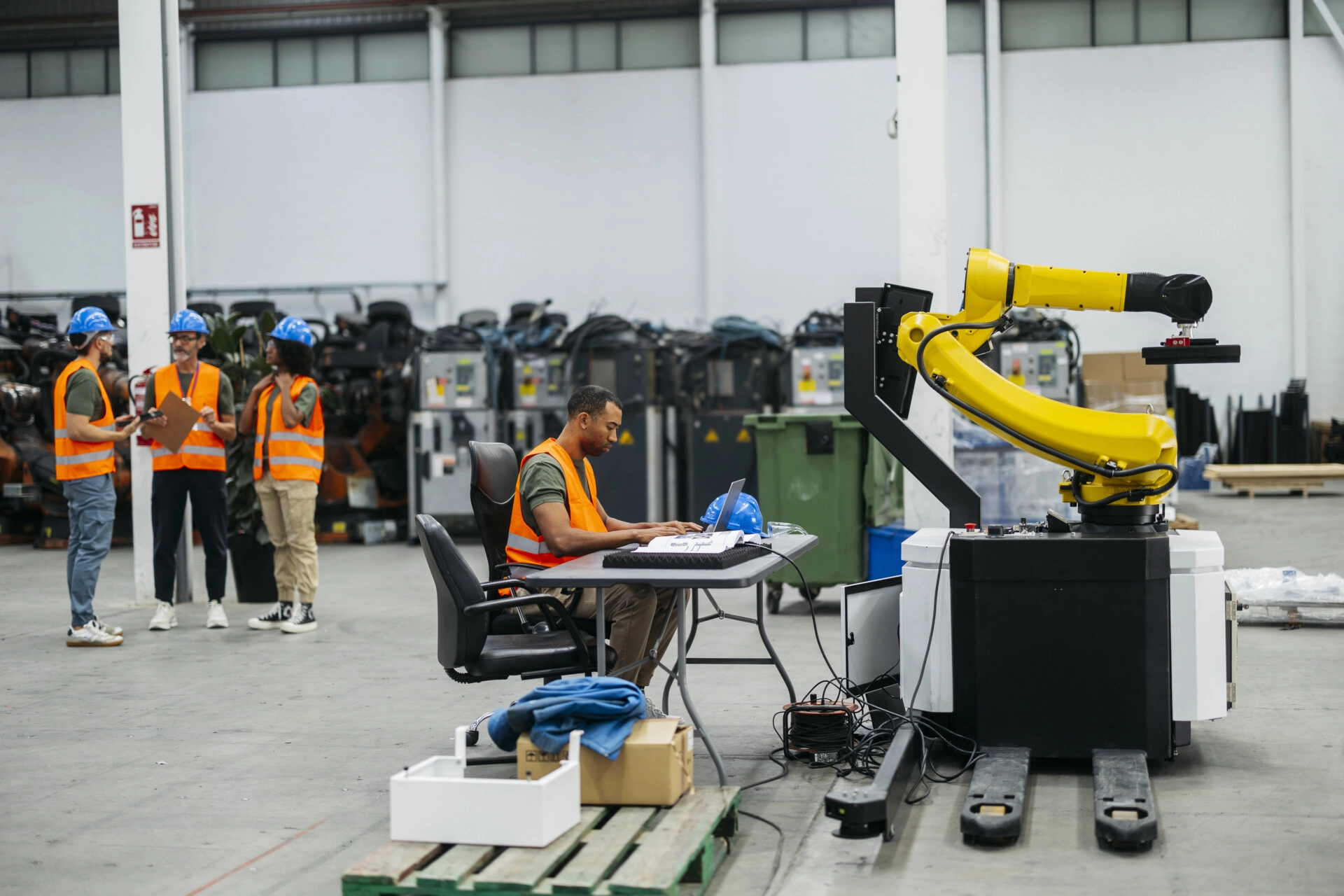
Emerging AI Trends for 2025
- Generative AI adoption continues to rise, with governance shaped by the EU AI Act.
- Voice and vision AI bring advances in translation, recognition, and contextual understanding.
- Edge computing ensures localised, low-latency data processing.
- Digital twins replicate real-world systems for predictive analysis and early fault detection.
Pathways to Success
Embedding AI in Digital Transformation
Success depends on aligning AI projects with corporate goals, securing early employee buy-in, and choosing flexible, scalable technologies.
Humans and Machines in Partnership
Rather than replacing people, AI augments human potential. Digital assistants and collaborative robots (cobots) relieve teams from routine tasks, enabling them to focus on strategy and creativity.
Embracing a Cultural Shift
AI adoption is as much about mindset as it is about tools. Transparent communication, training, and a willingness to innovate are vital to securing long-term value.
How Linvelo Helps Businesses
Linvelo partners with organisations to integrate AI effectively – whether through custom software, embedding AI into existing systems, or guiding full-scale digital transformation. From concept to deployment, Linvelo ensures businesses gain measurable outcomes.
Conclusion
Artificial intelligence and automation are shaping business in 2025 and beyond. Generative AI, hyperautomation, digital twins, and cobots are no longer optional extras but core to competitiveness. Companies that embrace them with a clear strategy will boost efficiency, employee satisfaction, and customer trust—laying the foundation for sustained growth.
FAQ
Which AI tools show immediate benefits?
Task management systems, automated chatbots, and RPA solutions deliver quick efficiency gains.
Are small businesses also set to benefit?
Yes. SMEs can leverage AI to remove repetitive work and concentrate on creative and strategic initiatives.
What criteria matter when selecting a provider?
Experience, scalability, and a clear roadmap are crucial indicators.
Why is edge computing relevant?
It enables rapid data handling with minimal delays—essential for sectors like logistics and healthcare.
Can AI systems make mistakes?
Yes, particularly if fed with flawed data or poorly trained models. Continuous oversight is necessary.
Where is AI applied today?
In marketing, sales, financial analysis, fraud detection, and operational management—AI is everywhere decisions and efficiency matter.